By Ivan Lucy
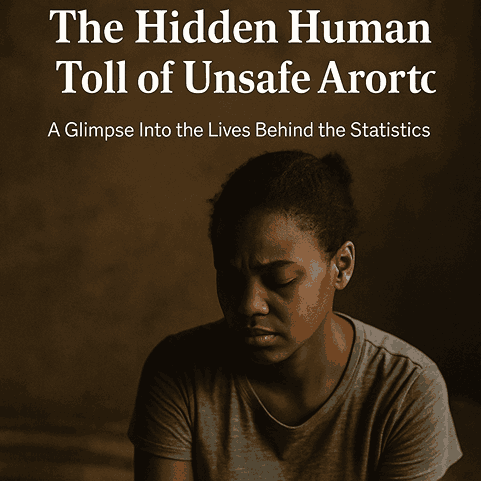
Nestled among the rolling hills of Gwassi, where the wind carries whispers from Lake Victoria, a quiet crisis unfolds in the shadows of society. It is the story of desperation, silence, and survival—an account that reflects the grim reality facing many young women across Kenya.
Apondi, just 20 years old, found herself at a crossroads when an unplanned pregnancy disrupted her life. Fearing her father’s wrath and societal judgment, she turned to her younger sister, Akoth, barely 19, for help. With no one else to turn to and no safe, accessible options in sight, the two began a journey marked by fear, secrecy, and danger.
Their first stop was a local facility where an abortion was performed for Ksh.5,000. In a dim, makeshift room cluttered with dusty papers and a worn-out bed, Apondi received an injection and some pills—her fate sealed by a doctor who offered no counseling, no options, only procedure.
But relief did not come. A week later, her symptoms returned. A new pregnancy test confirmed her worst fears—she was still pregnant. Another visit to the same doctor led to a second procedure and more complications. This time, the doctor demanded more money and began issuing threats.
Six months after her first visit, Apondi was still carrying the pregnancy. With all options exhausted, she confided in her mother, who arranged for a third and far more dangerous procedure in a house in Mathare. Without anesthesia, Apondi underwent a painful and traumatic abortion involving surgical instruments. The fetus was removed in pieces. The experience left her broken and haunted.
Apondi’s story is not an isolated one. Across Kenya, countless young women face similar ordeals. Despite Article 43 of the Constitution guaranteeing the right to the highest attainable standard of health—including reproductive health—many women, especially in rural areas, lack access to safe and legal abortion services.
The country’s legal framework offers little clarity. Article 26 of the Constitution prohibits abortion unless a trained health professional deems it necessary to save the mother's life or prevent grave harm. Yet the law's ambiguity, paired with stigma and weak implementation, leaves many vulnerable to exploitation by unlicensed providers.
In backstreet clinics across the country, unsafe abortions continue unabated, often performed by unqualified practitioners in unsanitary conditions. The consequences can be devastating—hemorrhage, sepsis, infertility, and even death.
A report by the Ministry of Health reveals a staggering 464,690 abortions occur annually among young women aged 10 to 24, leading to 2,600 deaths and over 21,000 hospitalizations due to complications.
Homa Bay County, with a teenage pregnancy rate of 23%, far exceeds the national average of 15%. At the Homa Bay Teaching and Referral Hospital, the repercussions of unsafe abortions are felt daily.
According to Dr. Julius Ochieng' Ondigo, an obstetric gynecologist at the facility, most cases involve girls aged 13 to 20. The hospital records at least two cases of post-abortion care among teenagers every week, with an additional six to eight women of various ages seeking similar care.
Many arrive in dire conditions—infected, dehydrated, anemic, or already septic. Emergency interventions such as blood transfusions, surgical procedures to evacuate the uterus, and intensive antibiotic regimens are often required to save their lives.
The impact doesn't end with physical trauma. Unsafe abortions are a leading cause of maternal mortality and infertility. Cases involving perforated wombs and pelvic infections can render women unable to conceive in the future. The long-term damage is both physical and emotional.
Sterility resulting from unsterilized instruments or poorly performed procedures is a cruel price to pay for desperation. Fallopian tube infections caused by ascending bacteria are common, leading to permanent infertility in many cases.
Dr. Ondigo highlights the challenge of handling these emergencies due to a lack of specialized equipment and resources. Blood shortages, limited access to diagnostic scans, and insufficient antibiotics hamper their ability to deliver timely, effective care. Often, the hospital must rely on support from partner organizations to meet the demand.
Beyond the clinical care, the hospital’s reproductive health department also offers counseling to girls grappling with the emotional aftermath of abortion. Addressing trauma, offering mental health support, and educating patients about family planning are critical parts of the healing process.
The government’s own National Guidelines for Quality Obstetrics and Prenatal Care emphasize the importance of post-abortion family planning counseling. Yet, implementation remains inconsistent, especially in under-resourced regions.
As stories like Apondi’s continue to surface, they serve as stark reminders of the consequences of neglecting reproductive health rights. Promoting safe sex practices, expanding access to affordable contraceptives, and ensuring confidential healthcare services must be prioritized.
Abortion is not just a medical issue—it is a reflection of deeper systemic failures, from poor sex education to poverty, cultural stigma, and gaps in healthcare policy. Comprehensive solutions must address not only the symptoms but also the root causes that drive women into the arms of unsafe providers.
To save lives, reduce suffering, and empower young women to make informed decisions, Kenya must invest in reproductive healthcare, clarify its laws, and confront the stigma that surrounds abortion.
Names have been changed to protect identities.